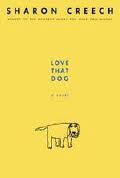
Sharon Creech, Love That Dog, USA, HarperCollins Children’s Books, 2001, 86 pp. children’s poetry, Grades 2-6
Sharon Creech, Love That Dog, USA, HarperCollins Children’s Books, 2001, 86 pp. children’s poetry, Grades 2-6

Complied by Galina Smirnova, Book: Fairy Tales of Siberian Folks Story: How the Camel Lost his Good Looks,Design by Victor and Larisa Yegorov, Krasnoyarsk “Vital” Publishers, 1992, 23-23 pp. Folktales for Children, Grades K-4
Long ago the arrogant camel was one of the best-looking animals in the forest and he proudly announced it to be sure all the animals knew of his handsome qualities. Soon the animals got fed up with his boastful comments and plotted against him asking to borrow his beautiful horns and tail. This short child-centered folktale can be described as a pourquoi tale as it’s meaning is to describe why camels look the way they do and also why being egotistical is not a good trait to have.
Activity
1. I think the best activity to do with young children based on a short pourquoi tale is to talk about it briefly (the silliness of it) and bring another book in to the discussion that is also a pourquoi tale. The students can discuss it again. Then the teacher can assign student to brainstorm a kind of way they can describe why the camel looks the way it does and write their own story.

Jarrett J. Krosoczka, Lunch Lady and the Cyborg Substitute, USA, Alfred A Knopf, 2009, 96 pp. Children’s Fiction picture story book. Grades 2-5
Lunch Lady and her sidekick Betty do more than serve hot meals for kids at a modern day school; they also fight crime. This fictitious story of a suspicious substitute who comes in to teach for Mr. O’Connell leads to a dangerous battle involving robots, students and the Super Hero Lunch Lady and her sidekick. The colorful images are set up in a comic-book fashion in a child centered point of view which brings the action to life. The expression used in the dialogue from each character emphasizes child fantasy and the importance of imagination.
Activity: Teacher could have students come up with a short story inspired by Lunch Lady and the Cyborg Substitute. This activity could be done during a writing work shop time where students will have a certain amount of time to work on their stories. When they are finished, they will peer-review, then teacher will check and then they will write final drafts. After final drafts are complete students will illustrate their stories and bind their books by either laminating them or using cardboard for the front and back covers and using construction paper to decorate their covers.
